

Software Engineer Headshots: Branding Yourself for Tech Recruiters
Your headshot is your first impression with tech recruiters: often before they even read your resume. As a software engineer, you need to project competence and trustworthiness while maintaining approachability and authenticity. You don't need to look like a traditional corporate executive, but you absolutely need to look credible and professional.
The challenge for most software engineers is finding the sweet spot between "I know what I'm doing" and "I'm someone you'd actually want to work with." Your headshot needs to work across multiple platforms: LinkedIn, GitHub, company websites, and conference speaker profiles: while representing your personal brand consistently.
Why Your Headshot Matters More Than You Think
Recruiters spend an average of 6 seconds scanning your LinkedIn profile before deciding whether to engage. In those crucial moments, your headshot carries enormous weight in their decision-making process. Research shows that profiles with clear, professional photos receive 21× more profile views and 36× more messages than those without photos.
For software engineers specifically, your headshot serves multiple purposes beyond just looking professional. It humanizes your technical profile, builds trust with remote teams, demonstrates attention to detail, and differentiates you from candidates using generic avatars or casual selfies.
Tech recruiters are looking for engineers who can communicate effectively with stakeholders, collaborate with cross-functional teams, and represent the company professionally. Your headshot is the first indicator of whether you possess these qualities.

The 4 Headshot Styles That Work for Tech Professionals
Clean and Classic Studio Style
This is your safest choice and works particularly well for backend engineers, data scientists, and anyone in highly technical roles. You'll use a simple, solid background in light gray, white, or navy, with crisp lighting that creates soft shadows rather than harsh contrasts.
Your wardrobe should be clean and simple: button-downs, knit tops, or blazers work well. Avoid busy patterns or logos. Your expression should be a soft smile or confident neutral expression with direct eye contact. This style is versatile and timeless across all digital platforms, making it ideal for LinkedIn profiles and company team pages.
Natural Light Headshots
If you work in more collaborative roles like frontend development, UX/UI design, or technical leadership, natural light headshots project approachability while maintaining professionalism. These work especially well if you're building thought leadership or speaking at conferences.
Use textured backgrounds like glass, plants, or office architecture rather than stark walls. Soft daylight creates the most flattering illumination. Choose natural-toned clothing in blue, olive, tan, or white. Your posture should be relaxed with genuine body language rather than stiff formality.
Editorial-Inspired Branding Portraits
This style allows you to stand out while showing personality and authority. It's perfect for startup founders, tech speakers, or senior engineers building personal brands. You can use stylized poses like leaning against a wall or sitting at an angle, with lighting that creates depth and dimension.
Your wardrobe should reflect your personal brand: this might mean a signature style or color palette you're known for. The key is intentionality rather than casualness. These portraits work well for speaker profiles, founder bios, and thought leadership content.
Minimalist Branding Headshots
Independent tech professionals like freelancers, consultants, or fractional CTOs often benefit from minimalist headshots that adapt seamlessly across personal websites, newsletters, and media profiles.

Use white or beige backgrounds with monochrome clothing. Crop closely to focus on your expression and eyes. Choose clean-lined outfits without busy prints or distracting elements. The goal is timeless simplicity that puts all focus on you as a person.
Technical Execution That Gets You Hired
Camera and Lighting Setup
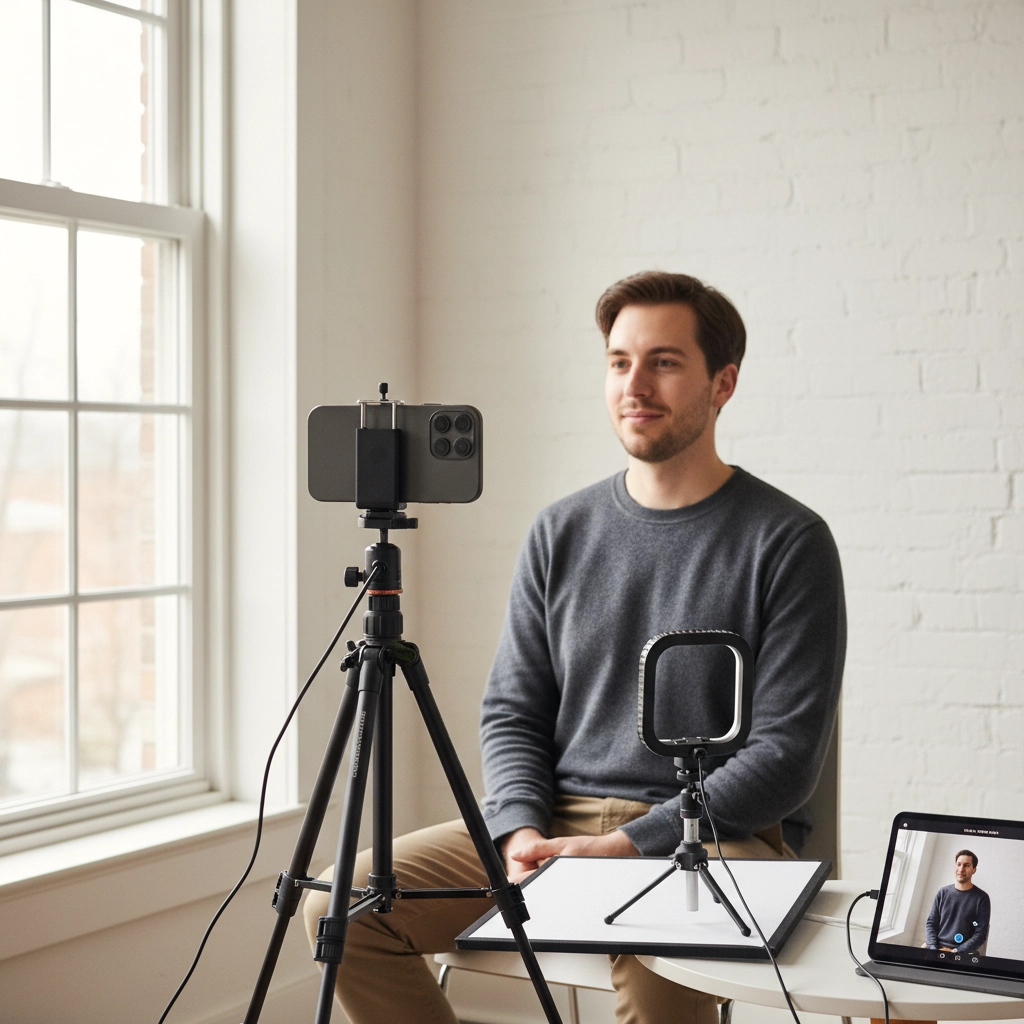
Always shoot in color rather than black and white: color photos better capture warmth and approachability, which are crucial for building trust with remote teams. You should be the only subject in the frame, shot against an uncluttered wall, background, or natural landscape without distractions.
If you're using a smartphone, use portrait mode with the focal distance set to 1.4 to blur the background and create professional depth-of-field. Natural light is your friend: position yourself near a large window or shoot outdoors in open shade for the most flattering illumination.
Expression and Body Language
Maintain direct eye contact with the camera to create connection with viewers. Keep your shoulders relaxed and avoid crossing your arms, which can appear defensive or unapproachable. Your expression should project confidence without intensity: think "approachable expert" rather than "intimidating genius."
Research shows that recruiters respond significantly better to photos showing happiness and positivity rather than serious or stern expressions. A genuine smile or warm, confident expression makes a measurable difference in engagement rates.
Authenticity Over Perfection
The most important element is authenticity. Don't try to project an image that isn't genuinely you: it will show in the final result and create disconnect when people meet you in person. Interestingly, recruiters tend to respond better to casual, relaxed photos that show confidence and comfort rather than overly formal shots that feel staged.
Your goal is to look like the best version of yourself on a good day, not like a completely different person.
Building Consistency Across Platforms
The Power of Visual Recognition
Use the same headshot across all your professional profiles: LinkedIn, GitHub, Twitter, personal websites, and conference speaker profiles. This visual consistency helps recruiters and potential collaborators recognize you across platforms and reinforces that they're connecting with the same person.
On GitHub specifically, replace the default avatar with your professional headshot rather than a generic icon. Include your personal website link and email in your profile, and add a brief bio that humanizes your technical contributions. This personal touch makes your code repositories more approachable and memorable.
Platform-Specific Optimization
While you should use the same photo everywhere, consider how it will appear at different sizes. Your headshot should be recognizable even when displayed as a small thumbnail in search results or comment threads. This means clear facial features, good contrast, and avoiding backgrounds that get muddy when compressed.
For LinkedIn, ensure your headline clearly communicates your expertise with relevant keywords like "Software Engineer," "Backend Developer," or specific technologies you specialize in. Your summary should be written in first person and tell your professional story in 2-3 paragraphs that emphasize the value you bring to organizations.
Common Mistakes That Hurt Your Brand
The Selfie Trap
Avoid using casual selfies, even high-quality ones, for professional profiles. The angle, lighting, and composition of selfies immediately signal "casual" rather than "professional." If budget is a concern, ask a friend to take photos of you with proper lighting and composition rather than extending your arm and hoping for the best.
Inconsistent Branding
Don't use different photos across different platforms: it creates confusion and weakens your personal brand. Similarly, avoid using photos that are several years old or show significant changes in appearance. Your headshot should represent how you look today, not how you looked when you graduated.
Overthinking the Technology
You don't need expensive equipment to create a professional headshot. A modern smartphone with portrait mode, good natural lighting, and thoughtful composition can produce results that rival traditional photography. Focus on the fundamentals: lighting, expression, and authenticity: rather than gear.



Your headshot is an investment in your career that pays dividends across every professional interaction. Whether you're applying for your first engineering role or building authority as a senior technologist, the right headshot opens doors and creates opportunities for meaningful connections.
Ready to create a headshot that positions you for success with tech recruiters? ProfileHero's AI headshot technology generates professional photos in minutes, not hours, giving you multiple styles to choose from without the hassle of scheduling studio sessions or coordinating with photographers.